

Golf Spine Care for Women
Titleist Performance Institute Medical Expert Level 2
You didn't come this far to sit in the golf cart.
You love this game. You have worked hard for your swing, your handicap, and your place on the course. But you have noticed that "something has changed".
Your best golf doesn't have an age limit. — it has a body limit. And we can change that.
What is really happening in your body?
The body changes that no one told you would affect your golf game — but they do.
Between the ages of 35 and 60, women's bodies undergo profound physiological shifts that directly impact athletic performance, injury risk, and recovery. These are not signs of getting old. They are signs of a body that is changing — and one that needs a different kind of care than it did in your 20s and early 30s. Understanding what is happening is the first step to doing something about it.
The golf swing is one of the most physically demanding movements the human body performs. It requires rotational power, spinal flexibility, hip mobility, shoulder stability, and precise neuromuscular coordination — all firing in perfect sequence in under two seconds. When your body changes, the demands of the swing don't change with it. That gap is where injury lives.
Changing Bone Density
Declining estrogen affects bone density and joint integrity — increasing susceptibility to stress fractures, joint pain, and spinal compression during the high-impact forces of a golf swing.
Muscle Mass & Recovery
Hormonal shifts reduce muscle mass and slow recovery between rounds — making compensation patterns more likely and injury risk higher when the body fatigues.
Joint Mobility & Flexibility
Reduced collagen production affects ligament and tendon elasticity — leading to stiffness, restricted hip and thoracic rotation, and the feeling that your body won't do what your swing needs.
Nervous System Sensitivity
Hormonal fluctuation affects nervous system regulation — contributing to increased pain sensitivity, slower neuromuscular response, and the inconsistency you feel from round to round.
Recovery Time
Inflammation resolves more slowly with hormonal changes — meaning the soreness that once cleared in 24 hours now lingers for days, making it harder to play consecutive rounds.
Core Stability Changes
Shifts in core muscle recruitment patterns — common through perimenopause and beyond — directly affect spinal stability at impact, where the forces on your lumbar spine peak.
Why spinal health is everything for your game.
Your spine is not just the tower your swing rotates around. It is the home of your nervous system — and your nervous system runs your game.
The golf swing demands more rotational force from the spine than almost any other sport. For women in midlife, the combination of hormonal changes, reduced muscle support, and the accumulated stress of years of repetitive swing motion creates a perfect storm in the lumbar, thoracic, and cervical spine. When one segment is restricted, stiff, or in pain, your body compensates — and those compensations show up as inconsistency, lost distance, and eventually injury.
But here is the part most providers miss: your spine also houses your nervous system — the master coordinator of every movement your body makes. When spinal health is compromised, the signals your brain sends to your muscles are delayed or distorted. Your body cannot move the way your swing intends, no matter how good your technique is. This is why spinal health is not just a pain issue. It is a performance issue — and for women in midlife, it is the performance issue.

Rotation & Power
Thoracic and hip rotation are the engines of your swing. Midlife stiffness in these areas steals distance and forces compensation patterns that break down tissue.
Nervous System Precision
Your nervous system fires every muscle in your swing. Spinal interference slows those signals — and slower signals mean less power, less control, more inconsistency.
Injury Protection
A spine in proper alignment and balanced tone absorbs the forces of your swing safely. A restricted spine transfers those forces into vulnerable soft tissue every time.
Faster Recovery
When your nervous system is regulated and your spine is moving freely, inflammation resolves faster — so you can play more often without paying for it afterward.
Mental Sharpness
A regulated nervous system supports clearer thinking, better focus, and the calm competitive presence that separates good rounds from great ones.
Longevity in the Game
Women who invest in their spinal health consistently play longer, with less pain, and often experience their best golf in their 50s and 60s — not despite their age, but because of their care.
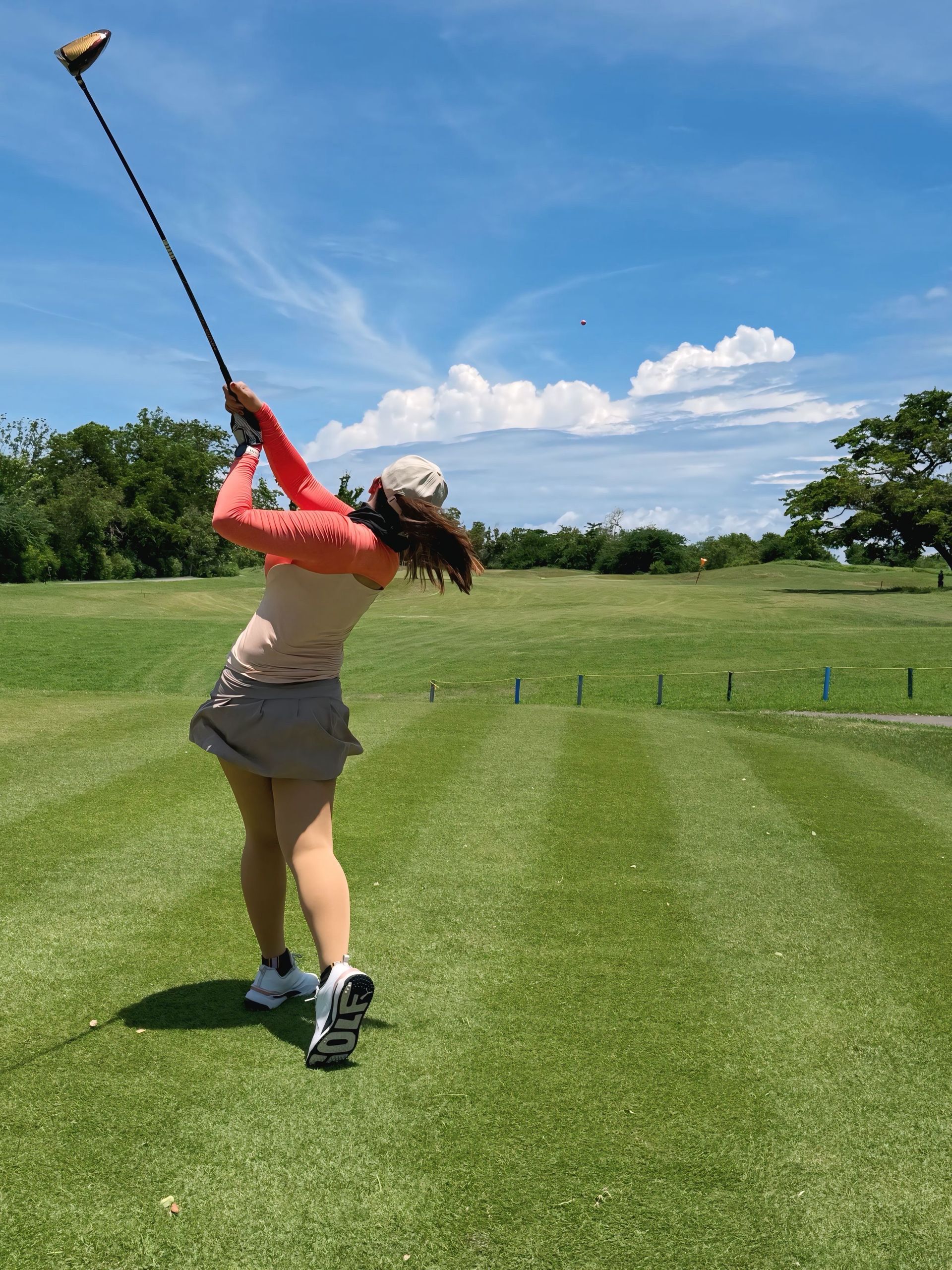
Common injuries in women golfers 35–60
If it's keeping you off the course — we can help.
These are the injuries we see most often in women golfers and athletes in your age range — all of them treatable, all of them connected to something specific in your body that we can identify and address.
Low Back Pain
The #1 golf injury for women in midlife — amplified by hormonal changes to core stability and the rotational demands of the swing at impact.
Shoulder Pain & Restriction
Rotator cuff strain and impingement — often worsened by reduced collagen elasticity and thoracic spine stiffness that limits the shoulder turn you need.
Hip Tightness & Pain
Loss of hip internal rotation is one of the most common limitations in women golfers over 40 — directly connected to back pain, loss of distance, and swing faults.
Golfer's Elbow
Medial elbow pain from repetitive stress — more common in women whose grip compensates for reduced shoulder and hip mobility through impact.
Knee Pain & Instability
Reduced muscle support around the knee joint — particularly common post-menopause — creates instability that destabilizes the entire kinetic chain.
Neck & Upper Back
Cervical tension and thoracic stiffness that limits your ability to maintain posture and restricts the shoulder turn essential for power and consistency.
Fatigue & Slow Recovery
Playing through chronic low-grade pain is exhausting — and when recovery slows with hormonal changes, the cumulative toll on your body compounds round by round.
Distance & Performance Loss
Not injured — just losing ground. If you have lost distance or consistency despite good coaching, a physical limitation is the ceiling. We find it and raise it.
The Golf Spine Care approach for women
Three phases. One outcome: you back on the course feeling extraordinary.
Every woman who comes through Golf Spine Care moves through three phases — from precise assessment and targeted care, through restoration of movement and nervous system balance, to performance optimization that reflects what your body is truly capable of.
01
Assess
Find the real cause
A full New Patient Experience with TPI physical screen and FMA evaluation — identifying exactly where your body is breaking down, how midlife changes are contributing, and how your limitations are showing up in your game and your pain.
02
Restore
Heal the body
Tonal chiropractic nervous system care, Laser Therapy — releasing restriction, reducing pain, restoring mobility, and recalibrating the neurological signals your swing depends on.
03
Perform
Play your best golf
Optimize your kinematic sequencing, build resilience against re-injury, and access the physical and mental clarity that makes the difference between surviving a round and absolutely loving it.
Golf Spine Care woven into a full concierge session with tonal chiropractic, laser therapy, nervous system care, movement assessments, and performance exercises.
For women who want the full picture addressed in one session.
This is the most comprehensive option we offer. The goal is simple: maximum results for you and the game you love.
Let Dr. McCurley show you exactly what your body needs to play freely, feel strong, and love this game for decades to come. She is ready for you — right here in Seneca, SC.
Ready to start? Book your New Patient Experience today.
What becomes possible
This is what our women golfer patients experience when they commit to their care.
These are not promises — they are the consistent experiences reported by women just like you who stopped accepting pain as inevitable and started investing in care that actually works. Your best golf may genuinely still be ahead of you.

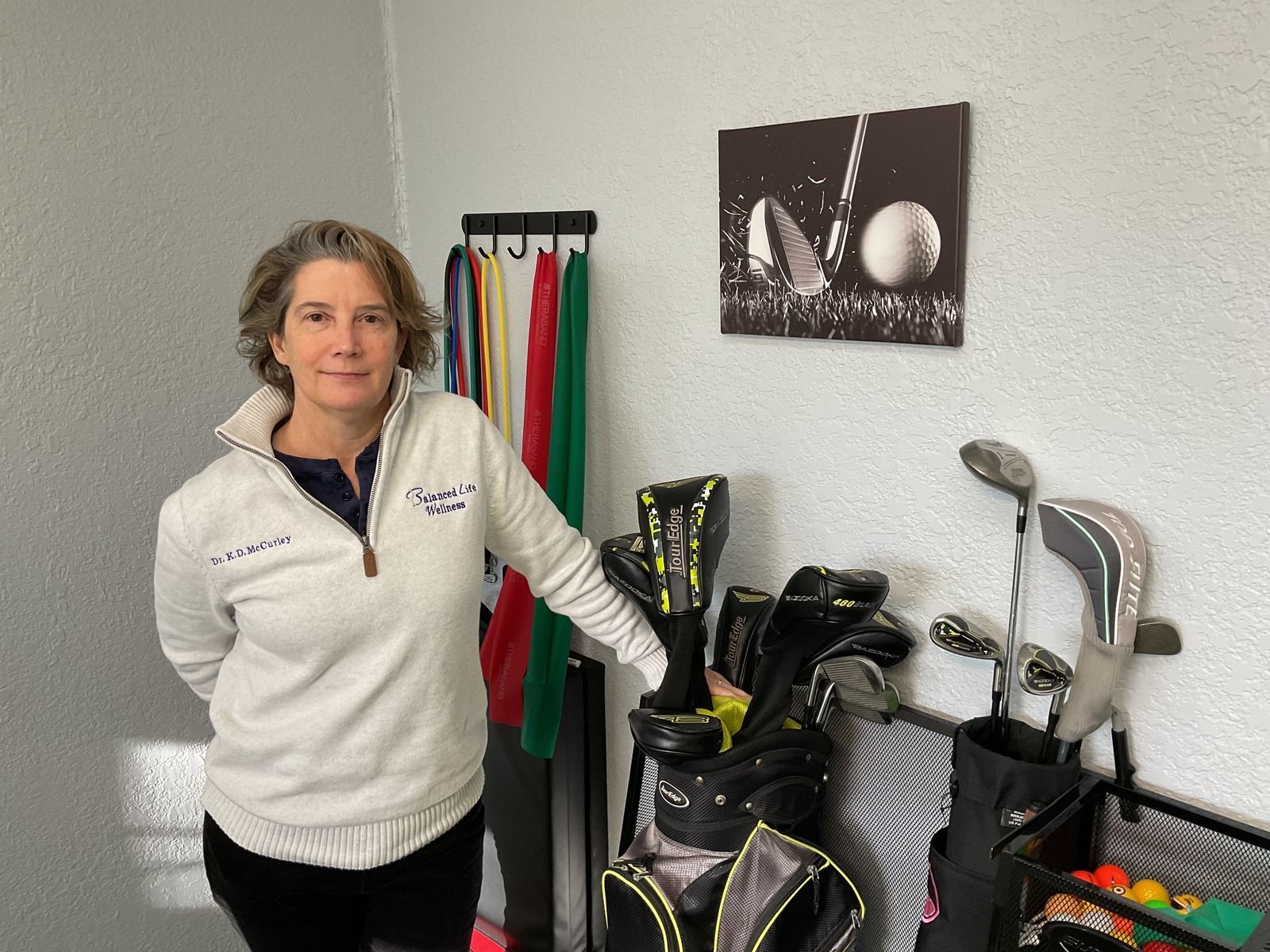
From Dr. McCurley-woman to woman.
You are not too old. You are not past your prime. You are under-cared for.
I have sat across from dozens of women in this exact season of life — accomplished, athletic, competitive women who have been told by well-meaning doctors that what they are feeling is just part of aging. That they should expect less from their bodies. That slowing down is the only option.
I do not believe that. Not for a single moment. The women I care for in their 40s, 50s, and 60s are some of the most determined, high-performing athletes I know. They just need care that meets them where their bodies actually are — not where their bodies were 20 years ago. That is what Golf Spine Care is designed to do. And I cannot wait to show you what is possible when your body finally gets the care it deserves.
— Dr. K.D. McCurley, DC · TPI Medical Expert Level 2 ·
